The Conjoined States of America
Neg L'Agent Technologies in conjunction with a few random data center supporters (a coalition of sorts) are advocating for each other to confuse and onboard the politicians and citizens of nine states where it's really really cheap for modern data centers, like those leased by Neg L'Agent Technologies, to operate ... and you know, do super intelligence stuff, Wink®!
Jim, did you give it the entire prompt or just that stuff that helps us find some impressive sounding numberses?
Carrol, we got it to support our conjecture that we don't use many waters, like less than 96% or whatever it was you asked us to find.
Jim, that's excellent, don't you think? Also, you are invited to my potluck at the Rawville Dam next week.
Conjoined We Should Probably Stand
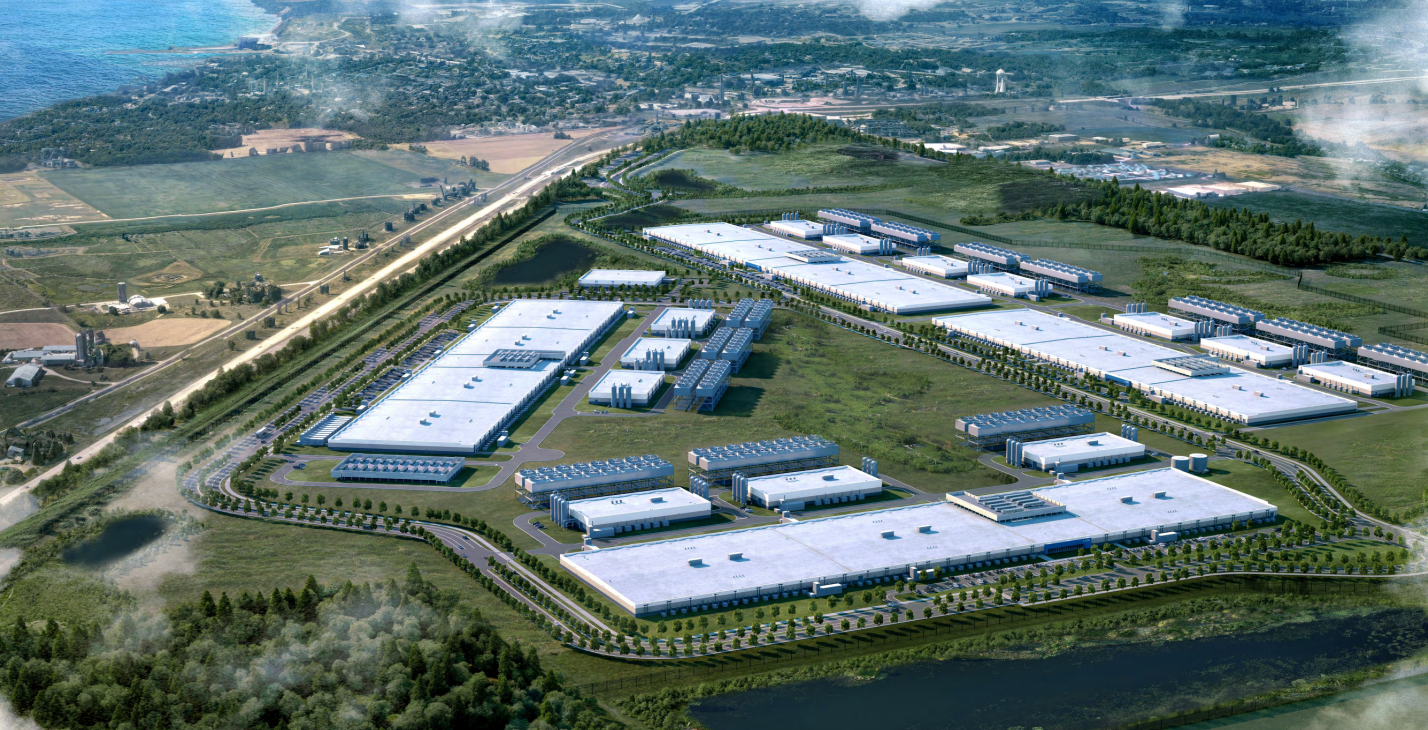
Should We Stand Conjoined?
Conjoined, Should We Stand?
We Should Stand Conjoined, Maybe?
Nine States Conjoined? Yes! Definitely! Exactly!
Neg L'Agent Technologies in conjunction with a few random data center supporters (a data center coalition or something of sorts) are advocating for each other to confuse and onboard the politicians and citizens of nine states where it's really really cheap for modern data centers, like those leased by Neg L'Agent Technologies, to operate ... and you know, do super intelligence stuff, Wink®!
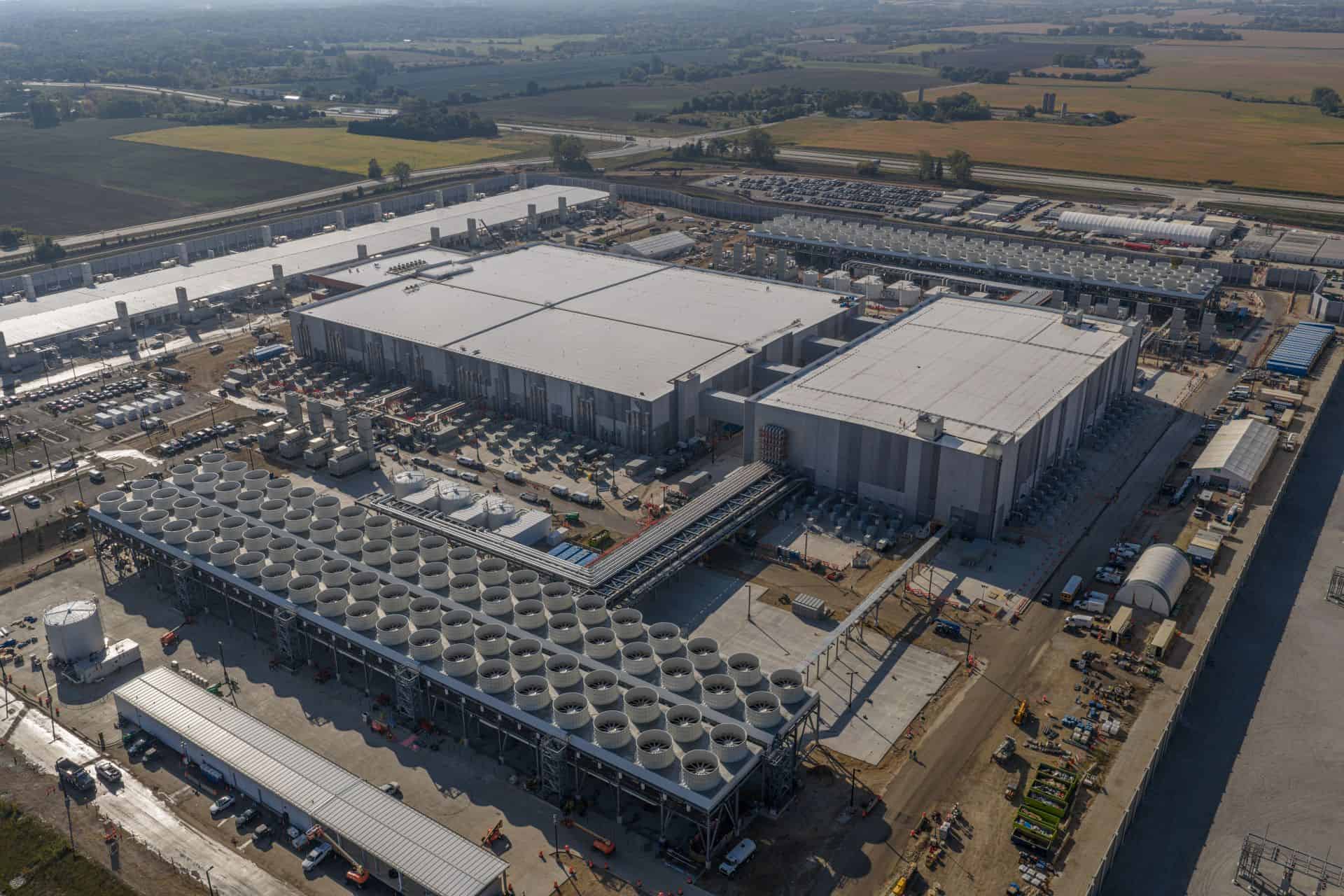
Above: Tiny semi trucks and machines draw emphasis on how superficial and reckless a data campus is to your community. The buildings are large and unimpressive so as to remind residents of their authoritative lack of importance, the data center, not the residents, that is. However, it can be used by children to generate MadLibs.
Neg L'Agent Technologies and other advocates of ridiculously large and impressive, (or was it grid oppressive?) sounding data centers have conjoined (professionally, of course, Wink®), to werk together to find, and then spread a couple positive sounding benefits onto the ears of several lonesome citizens currently driving home from their busy jobs that support their local communities. The arbitrary sounding benefits loosely associated with the ingress of new data centers have been broadcasted over the airwaves in nine states (Georgia®, Indiana®, Nevada®, North Carolina®, Ohio®, Oregon®, Pennsylvania®, Texas® and of course, Virginia®, isn't it always Virginia?) resulting in at least four drivers frustrated due to the infection of abusive earworms further compounded by their confusion that a data center alliance would use a vintage technology for its data center outreach campaign. That's right, because they want to convince you, the tech ignorant, that their ingress is beneficial to your community, children's schools and they don't use the water you rely on to water your farm or cows and stuff, and they're all really super quiet maybe too, after you remove your hearing aids of course, hopefully. Data centers also have benefits, like some impressive sounding numbers and rewards like those you get from participating in the shopping games your local grocery store uses to entertain their shareholders.
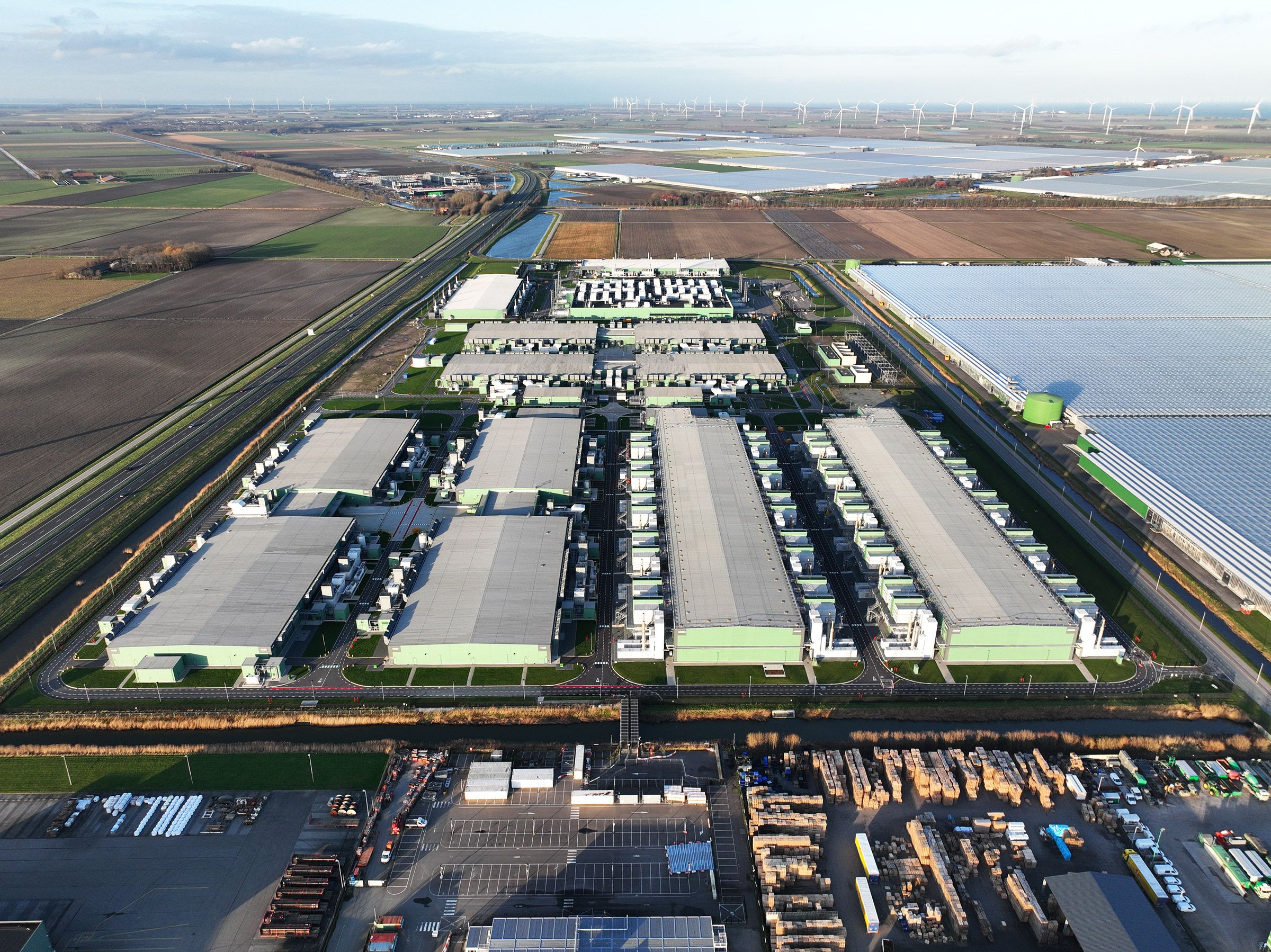
Above: A cloud where data doesn't consume most water or energy not donated by residents or their state.
Just like your local grocery stores, that according to foodindustry.com are an average size of 51,507 square feet, our data center campuses are just a tad bigger (e.g., about 100,000 to 1,000,000 square feet or larger per building!). Sort of implied, but FYI a center is a cute name for a campus which is a facility that is comprised of more than one building. According to electricchoice.com there are presently about 3,525 operational data centers in the United States. In the conjoined states campaign a couple benefits of data center ingress are frequently boasted. For example, in one of the conjoined states (assigned the code named Oregon®), the data center industry directly employs 9,300 workers! These jobs are the kind where people go to work inside the data center to keep it running, sometimes. According to electricchoice.com there are about 83 operational data centers in hypothetically conjoined Oregon, meaning this hypothetically influential industry may have created as many as 108 hypothetical jobs per center. In a more recent article from Oregon Public Broadcasting, Oregon data centers support as many as 2,630 direct workers across 111 data centers, or as many as 23.7 jobs on average! We noticed this error too; it is not possible to employ 0.7 persons because it conflicts with the spirit of many Accidental Death and Dismemberment policies. We also noticed that 23.7 is a smaller value than 108, even after we rounded to the nearest whole person, 24. Furthermore, employee numbers can be rounded differently. For example, 23.7 can be rounded conservatively to represent a whole value (e.g., 24) or rounded with undeclared nuance and intricacy to reflect a hypothetical target value (e.g., 108). This is analogous to deciding whether to round up or down other types of numbers. For example, the following values: 1, 2, 0.5 and 1.5 clearly round to $10, 20 years, 501C, and 158.3 MPH, respectively. Wow, either way, buildings tend to employ a lot of people! Wow, math is really useful when it supports your agenda; so, I think we'll stop while we're ahead! Now consider a retail or grocery store that employs a bit excessively for its building space (e.g., 50,000 square feet), on the order of 20 to 80 employees! Wow! These grocers are not very efficient because they require so many more jobs to operate in less than half the space! Data centers, which are more like enormous server campuses, utilize about the same number of employees as a typical grocery store, but across several buildings, so they operate much more efficiently! The conjoined campaign further identifies additional future unemployment potential created by data campus ingress which are code named the multiplier jobs. For example, one data center job, according to any of the conjoined-states campaign websites, probably might create up to six multiplier jobs! In the conjoined Oregon example as many as 65,530 (or interestingly 16-bit - 6 = 2x10E16 - 6 = 65,536 - 6 = 65,530) multiplier jobs are created from Oregon data centers. Think of it this way, one data center employee keeps one barista from becoming unemployed a bit longer because data center employees need a lot of coffee because they have a higher work burden when compared to a properly staffed grocery or retail store! Additionally, some data center employees need to buy a quick lunch, now fast food employees will likely stay employed longer! Let's dive even deeper, sometimes things break and more people are temporarily needed to fix it, in this scenario a center might consider recruiting temporary workers (day laborers are not ideal for PR reasons) that are like permanent employees but are temporary (but they don't know that yet), but who also need coffee and lunch! Data centers help the economy by keeping existing employees working at their jobs a tad longer, this is what's meant when our industry reports on the incidental and secondary jobs that result from data center ingress. It's important to maintain fresh water, so fishing is not a supported job, because as little as 96 % of the unused cooling water is not yet always needed. I think I finally understand what they might mean, Wink®!
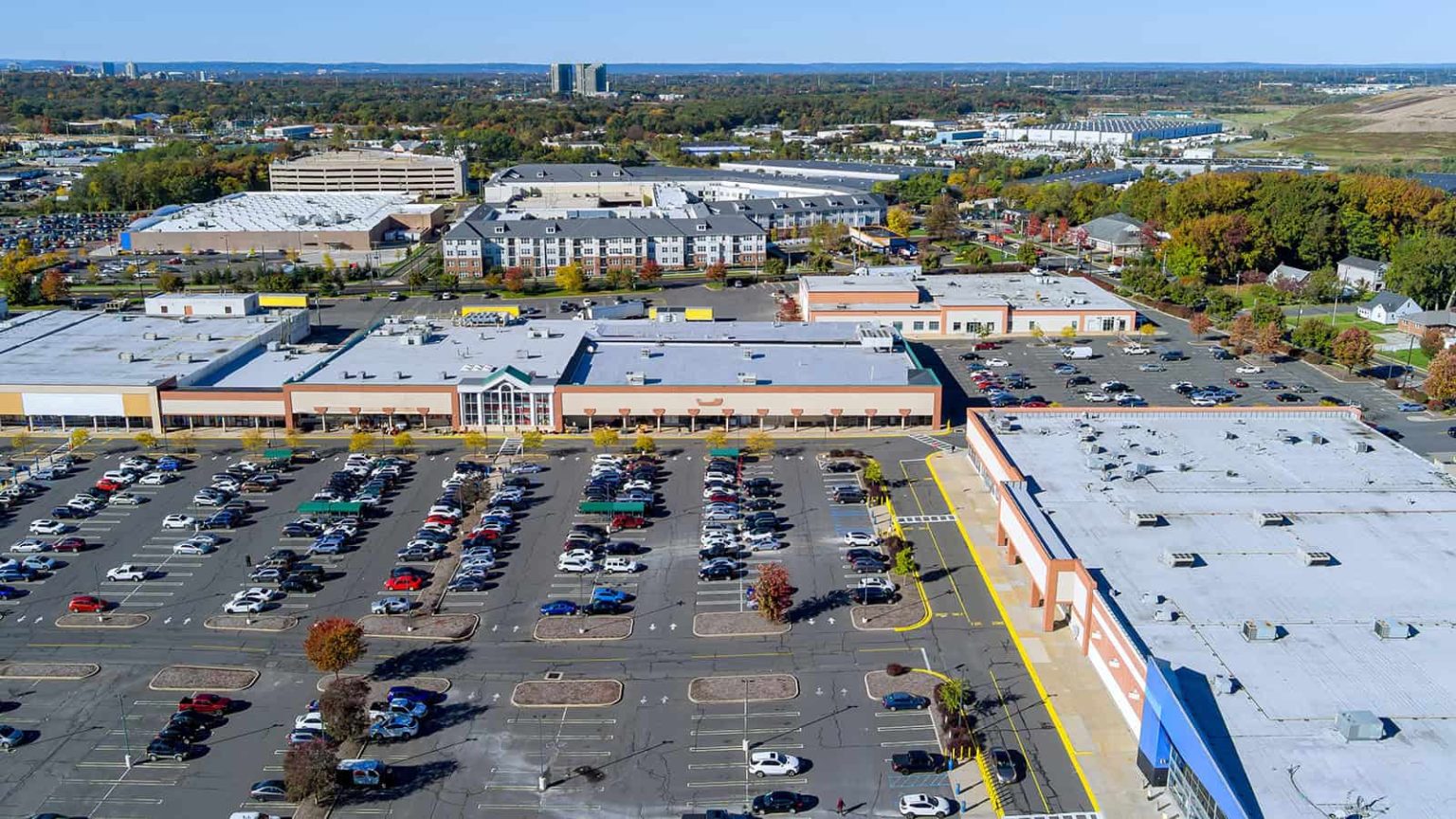
Above: Retail center where lots of people work and shoppers spend. Revenue from sales and taxes fuel the economy. Retailers also stimulate the economy by creating and sustaining incidental and support jobs. However, unlike data campuses retailers generally will not buzz loudly throughout the night to help you sleep at work the following day :(
This is actually getting quite intense. Lets gander at how wasteful retail and grocery establishments really are; I mean do they actually produce multiplier jobs the way data campuses do? When a grocer or retail establishment moves in, people enter them and spend on the economy, indirectly because in many parts of the US people pay a sales tax! Unfortunately, revenue from sales tax may support schools, or even help pay to maintain roads and infrastructure, or what have you, but does it really? In order to maintain fresh inventory on the shelves, the retailer might need to hire people, to keep stuff on them, the shelves I mean. They may need 10 to 20 employees just to fulfill customer transactions and do so with a smile; at least one employee must be skilled enough to handle the Karens and Kens from day to day! In order to get that inventory to the shelf someone needs to move it, say from a nearby dock or port, then to a truck that they must drive to the retailer. The driver also needs to fuel their truck and keep it maintained, so along the way they must refuel or occasionally have a shop repair and maintain it. This implicates the retail establishment also brings business to refueling centers and repair and maintenance shops, of which must have enough employees to keep their facilities operational and clean. In this example, can you count the number of multiplier jobs created by the retailer? Can you find Waldo? Exactly, nobody knows and only an AI can truly keep track! To further emphasize, unlike a data campus, a retailer depends on these extra roles, whereas one data campus doesn't depend on anything! Well, they sometimes depend on diesel for that rainy day, Wink®! You can sort of by now see where all of this is going. That's Exactly Right! Data campuses are super efficient and only need a bit of coffee and data center parts to run, so they can just nix these excessive support roles that only human driven industry needs! With fewer support roles altogether it's inevitable they can likely reduce traffic and congestion, somewhere, maybe? Additionally, now you can work from home, except if you work for a retailer, or work on cars, or plow fields, or maintain the drinking water, or take care of children or maintain our roads. At any rate, someone somewhere can probably work from home?
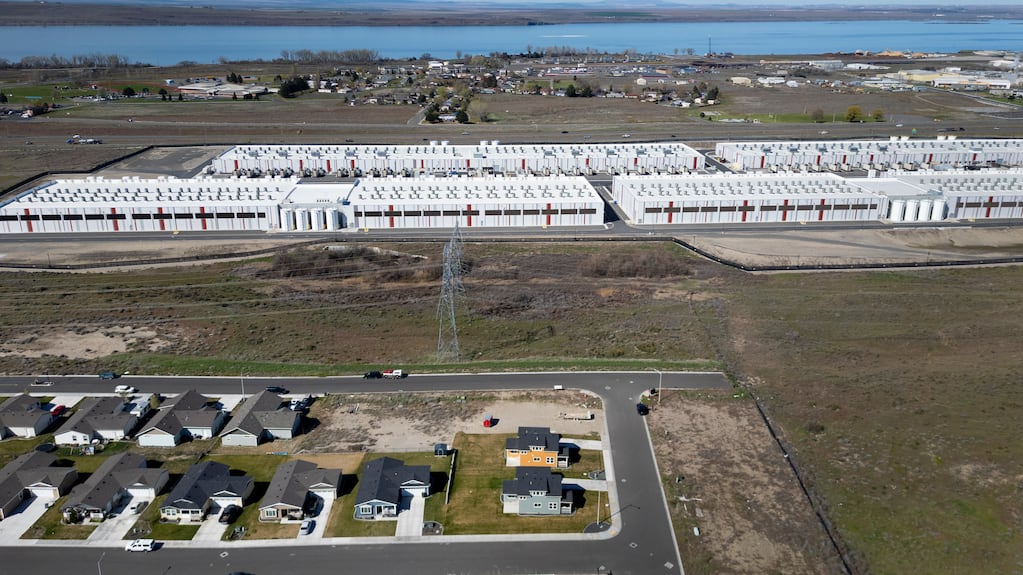
Above: Excited residents aren't not annoyed by the incessant buzz from their new data campus neighbor! Data campuses make exceptional neighbors (because - we're told that) because they ensure you nap through your work day after they keep you dancing 24/7 (no, not 23.7 - that's a dismembered employee number, remember?). If you work from home they might mostly not ensure paid high speed data access to the cloud nodes associated with your account that was recently stolen by a Rogue®, Mist-Configured®, or MissAligned® AI agent. Oops! However, it's probably all stored in a cheaper state, LOL your personal photos and data, that is! Wink®!
This campaign realizes some radio listeners don't trust anything except Coyote news and likely need to read about the benefits of data center ingress. Exactly! That's why the conjoined campaigns have a uniquely identical and generic WordPress website representing the interests of each of the nine, cheap to operate in, conjoined states! Each site features a unique landing page that is almost identical to each other. These sites feature an animated set of powerful hyperbolic statements that makes visitors probably feel important and heard (it is believed), oh and included too (but also not in an icky DEI way, of course). Best of all these sites have that 1990s digital feel, as if someone is typing out the print statement, "Hell Low World" in real time from their first C++ program that they absolutely did themselves (not made using super intelligence, we don't really care anyway)! There was a lot of effort put forward. High-tech, yes. This precipitates trust, doesn't it?
Now lets continue conniving, and attempt to convince you that these coalitions, or alliances, or non-profits, or whatever they are this week, are hypothetically not just thought experiments, and that they really do hypothetically care about the communities they'll literally move the earth from to support their dead anchor centers. This is why there is a special In the News section on each of the conjoined website campaigns; so you can really measure the impact of one of these exciting server campuses in your area, but only if you happen to live in one these lucky nine coalitionaly conjoined states, that is! Lets have everyone open a new browser tab and visit the site for the conjoined state of Virginia. If you are 13 or under, ask a parent because childrens' online safety cannot be guaranteed at this time (it's implicitly outlined in the privacy policy, it also causes unnecessary work; as in a need to find the data center retaining their information so it can be deleted, the information not the center that is). Once there take a few moments to reflect on the powerful animated and hyperbolic statements, such as how data campuses are the heartburn of our modern lives, etc. Then take time to experience the subtle differences between the landing sites of the other eight conjoined states. Please note, the desired "-connects" domain for a few of these conjoined states were probably already taken or cost too much, so the campaign had to make due with something similar, as a consequence some sites are more conservative and thus lack the spiffy animated text that's characteristic of the others. After your vertigo subsides, navigate to the In The News section of the conjoined Georgia site. Look at all these wonderful news articles that are in support of new peach tree accented Georgia-grown data campuses! Unlike traditional fact based reporting, typical of public broadcasting or reputation based journalism, many connected campaigns have elected to often feature opinion based news articles written by supporters and advocates of AI and data campuses. The articles from the conjoined Georgia site are not just opinion pieces, but their power and influence are enhanced by the publisher's requirement that readers enroll, subscribe or otherwise pay for opinion access. Grandma would thrive selling her opinions, wouldn't she? This lock down is practical, because it helps prevent other data campuses hosting their brand of super intelligence from learning and training on pro data campus opinions as well as prevents readers from unnecessarily having to verify the objectivity of a subjective opinion, or information that is intentionally sided (like publications written in support of Neg L'Agent Technologies, our daddy company!), oh well if we can't tell what's real we at least get to believe in what's comfortable, for now.
Arrghh! We just couldn't let the paywall bring us down, so we charged a fresh Neg L'Agent Agent to deblur one article referenced by the conjoined Georgia site, here's the first line we uncovered: eulav ot ot eht tnecer fo cimonoce gnireviled atad sretnec yb era sisylana ydaerla a ytisrevinU .aigroeG ,aigroeG gnidroccA; yeah, nothing to see here, just a ruse. Most likely this was to confuse the super intelligence, not to offend you. Also the report filed by our Neg L'Agent Agent strongly indicated this is a sentence written backward, therefor[e] after unscrambling we find: According Georgia, Georgia. University a already analysis are by centers data delivering economic of recent the to to value. That does make more sense, and something to consider if you generally don't consider opinion pieces sensical works of art! Now for a limited time, new Neg L'Agent AI subscribers can pleasurably deblur the rest of these nonsensical locked down opinion articles using the promo code FO[MO-MF-]*/+1-! This pleasure inducing promo code may entitle you the virtual use of up to 20 % of one full free shared deblur Agent! Restrictions always apply.
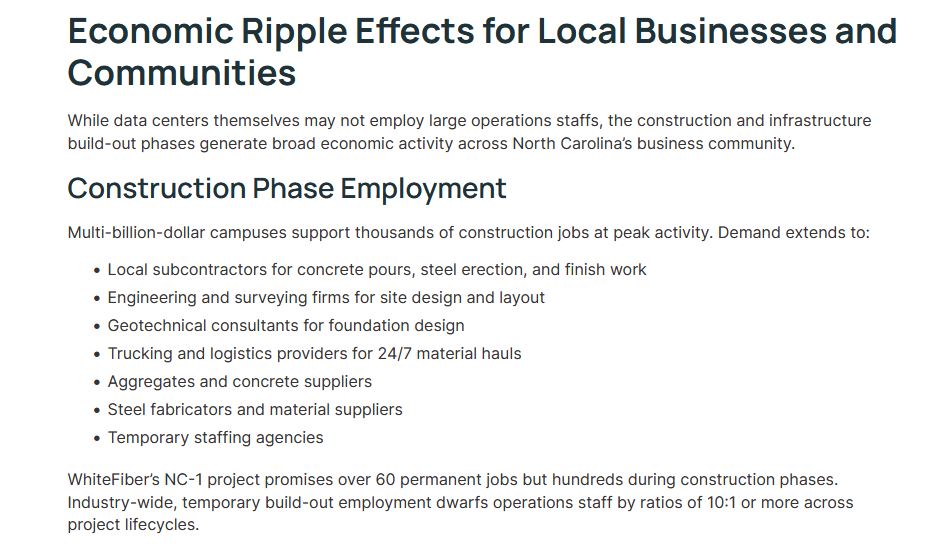
Lets be fair, not all articles linked on the conjoined states sites are opinions, some are quite serious and informal takes that generally support data campuses, such as a vintage North Carolina focused tldr article from February 2026. Way down the page, just after the eyes get tired from the big numbers and liberal use of significant figures, but not all the way to the bottom that you reach for the Visine, the article eventually draws emphasis on jobs. For example, it emphasizes a data campus like the one discussed can probably reign in as many as 60 permanent site jobs, as well as several more temporarily permanent jobs too! Wow, 60 jobs is pretty close to one large retailer, but keep in mind these soldiers are sometimes spread over an entire campus, like if one retailer was an entire mall. FYI, in case you are new to the interweb, tldr means the article was too long for most individuals to relearn how to use the web page scroll feature.
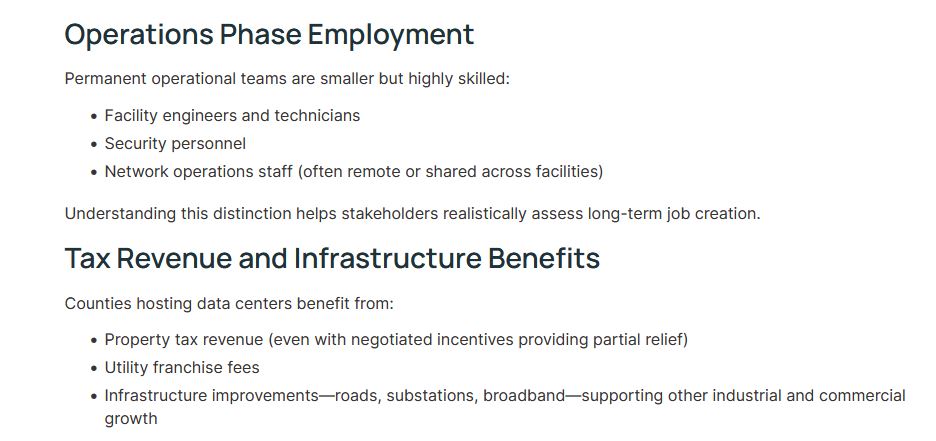
In this example, jobs discussed are in reference to a data campus project called the WhiteFiber NC-1 project. We speculate NC is short for North Carolina rather than Not Connected (could you imagine?). The WhiteFiber NC-1 project supports a range of three generalized positions that employment challenged residents of Not Connected can apply for: Facility Engineer, Security Personnel, and Network Operations Staff. I know what you're thinking, these are very specific generalized jobs that only 60 people get to try out for! To be fair, we already emphasized data campuses are very efficient compared to most industries, so they need little more than coffee and data center parts to stay operational. Expect fierce competition, otherwise invite more data campuses so you can continue to shine performing at one of the several temporary construction phase jobs! Additionally, you probably didn't subscribe to read the opinion articles, they probably have a stance on this, and you should consider paying to read them backward, before you start to under think it! Good news though, if you don't not live in Not Connected and have not yet lost your internet connection, you can opt to perform the Network Operations Staff job, remotely! I sure am getting excited about competing for one of these 60 jobs, how about you?
In another article we learn data campuses are the result of our dependence on WiFi and the 21 devices we own that need data centers (and botnets) to operate correctly. Surveillance and telemetry dependent devices such as your thermostat, TVs, doorbell spies, garage door sensors that ping you when you don't close the door fast enough, and even RGB concert lighting behind the TV all need data campuses to store the secret information you trusted them to learn about you while they eavesdropped. Remember, these aren't just trivial devices, they save lives and are important for the well being of ... I'll come back to that thought later. Anyway, we need to reassess how we feel about these campuses, if we use tech we should build campuses near our homes. Otherwise, we need to face the very real possibility that some data campus may just anchor itself along with its 60 or so jobs in other states like Florida! Your state may need an extension cord to stay connected. Did you know the cloud is a hard drive in a data center? Did you know your hard drive is shared by others and it isn't really one hard drive? Lets get back on topic. When a data campus project want's to do business in your state it's because your state is doing well economically and doesn't need to tax or charge data campuses anything to operate, we hope! To emphasize the industry's intent, Dan Diorio exclaimed threateningly, "Projects that Pennsylvania rejects, he said, will be eagerly embraced by other states, even other countries." In other words, if citizens push back on the handful of opportunities bestowed by Lord Data's campuses, just so states can hold out for better economic freedoms, or peace and quiet, well, these companies might take their boats and anchor them in a less hostile marina, if you catch my drift, and yes that's a pun developed by modern super intelligence! Ooh that article was really short, it suddenly ended, well it probably didn't have a data campus large enough to store it all, something to consider in the future. Well, lets move on shall we?

Above: Publicly accessible floor space that also supports the economy as well as the needs and interests of local residents.
Thus far we've spent quite a lot of our cloud storage bits discussing the couple benefits enjoyed by communities coerced by exciting new data campus ingress. FYI there is a lot more supportive information about that, on the conjoined campaign sites, and you should read it yourself for a single sided neutral take on the resourcelessness including that independent report frequently cited which delves into supporting some conjectures and idealized deliverables. One thing you probably don't think of when you forget to think about data center advocating coalitions, are the wonderful hypothetical things they do (we're not sure what that meant either). For example, each year one coalition takes an email vote to pledge to donate blood sometime in the future. This is called a virtual blood drive, because just like the industry's virtual pledge to not drive up costs related to the hogging of your regional infrastructure, when centers like these move in, they probably wont actually hold themselves accountable to deliver on anything they promised, except maybe the ads. This virtual blood drive frees the industry intellectually while permitting everyone to pat themselves on the back, so everyone can devise a few more potential benefits of personal cloud computing using your own discounted access to the hyper-scaled personal computing campus two blocks from home that we secretly charged you twice to use (time to ditch that gaming PC and NAS). Now the industry can finally commit further to other important sounding virtual promises that we can store in the Maybe Someday Cloud.
A lesser known fact is ... sorry I had something for that. Anyway data campus supporters and their alliances and coalitions and non-profits, and cake decorators too, all defy norms and strive for excellence! Pardon us for this run on sentence but; a lesser known fact is that in light of recent executive orders that forbid equality and personal acceptance but promote exclusion of people including the "D" word, data campus enthusiasts are virtually emboldened by their virtual commitments and virtual pledges to take new stands (no, not news stands) and double down on their virtual commitment to "D" and the two vowels, and hosts an online virtual library chocked full of self accolades that keep us warm when we have to skimp on heating the apartment this winter in order to afford and ensure our mandatory data centers' connection stays active. Oh yeah!
I once heard the heat generated from a data campus will offset our need to heat our homes when we can't afford to. Now, I'm certain that fact was made up? Come to think of it, are any of the facts not yet made up?
- Written by Neggie Blog®
- Real;ly Smart AI